Collecting and appraisal guidance
Are Old Documents Worth Money? What to Check First
The first job is not to name a price. It is to protect the paper, preserve its context and make a calm record before a box of family history gets separated.

A box of old papers can look like a problem to solve quickly. There may be letters, deeds, certificates, maps, receipts, photographs, military papers, diplomas, account books and envelopes from several generations. During an estate cleanout, it is easy to put all of it in one donation bag or divide it before anyone has time to look closely. That is exactly when the details that make a document meaningful can disappear.
Most old documents are not valuable simply because they are old. Many have little resale value. But a paper item can deserve attention when it connects directly to a notable person, place, event, family, ship, business or local history. Its condition, completeness, handwriting, seal, printing method and the story around it all matter. A calm first pass protects those clues without turning a family estate into a research project.
Start with the group, not the individual sheet
Keep papers in the order and groups in which they were found whenever possible. An envelope can identify a letter. A folded map may belong with a land document. A receipt, photograph, diary entry or family note can explain why a plain-looking certificate matters. The relationship among items is often more useful than a single page removed from the box.
Before sorting, take broad photos of the desk drawer, trunk, folder or box. Photograph labels, dividers, envelopes and any note written by the person who saved the papers. Then make a short list of the groups: family letters, property records, military material, business papers, local photographs or maps. This creates a practical record for everyone involved without handling every sheet repeatedly.
Use clean, dry hands and a clear table. The Library of Congress recommends keeping food, drink, paper clips, rubber bands, tape and glue away from paper collections. Its care guidance for works on paper also emphasizes a clean, stable environment and supportive storage. For a fragile item, less handling is usually better than gloves that make it difficult to feel a tear or brittle edge.
Look for context before you look for a price
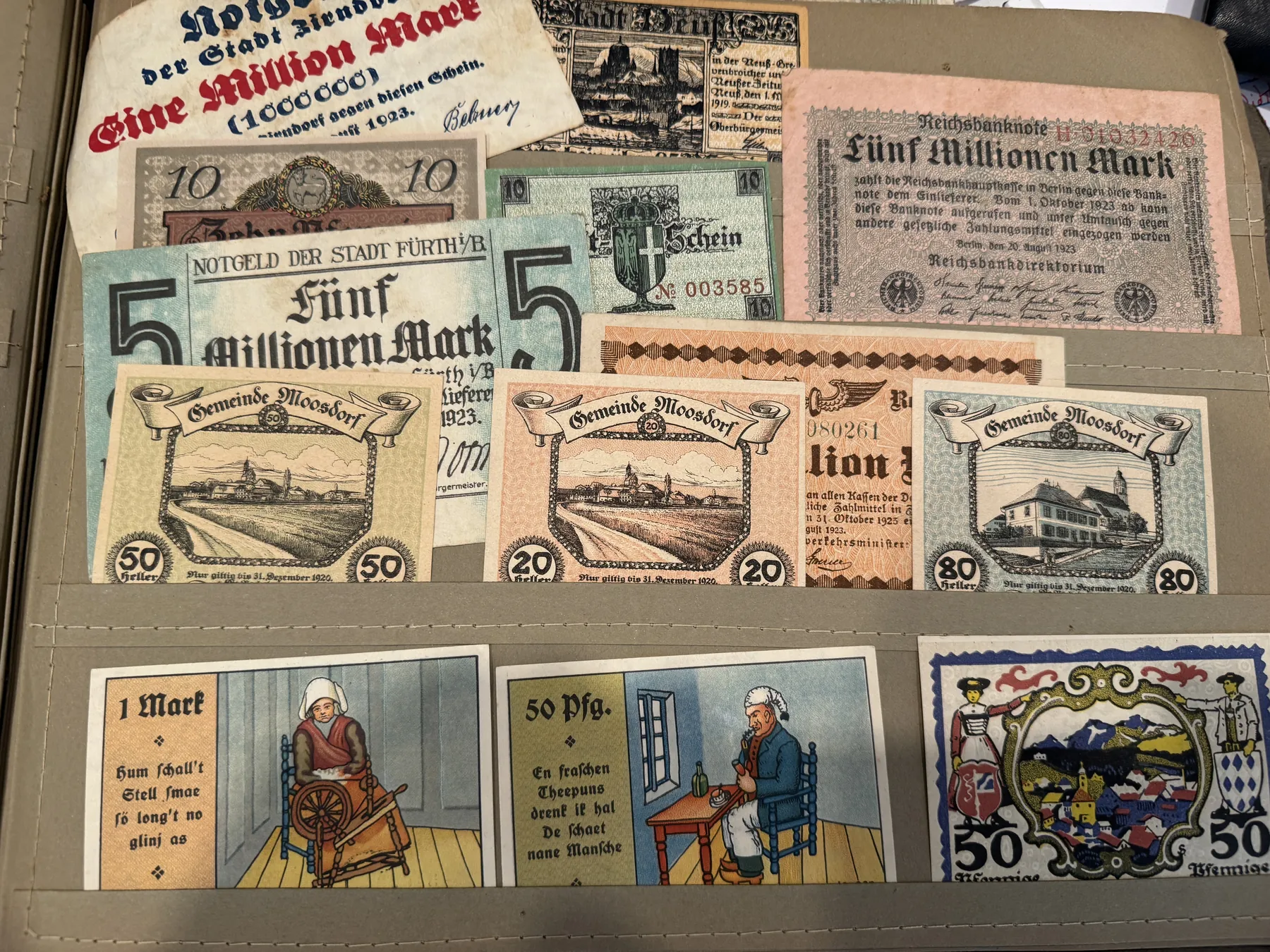
Start with factual clues. Who created, received or signed the item? What town, business, ship, school, organization or address is named? Is there a date, seal, printed heading, photograph, postmark, mapmaker or other marker that can be researched later? Does the item document a local event, a military service record, a property transfer, a maritime connection or a family story? Write down what is visible without trying to solve the whole history at once.
Age is one clue, not the answer. A common nineteenth-century certificate may have modest market interest. A later letter, photograph or business record could be much more compelling if it connects to a person, place or event that collectors and researchers care about. Likewise, an ordinary-looking packet can be meaningful because it is complete, while a single signed sheet with no envelope or history may be harder to place.
Keep family significance and resale value separate in your mind. A grandparent’s letters may be priceless to descendants and unsuitable for sale. A regional archive may care about records that an auction audience would not. The right next step may be to preserve, share, donate, appraise or sell. Good decisions start with the details, not an assumption that every paper item belongs in the same category.
Protect the condition, even if it looks worn
Do not iron a crease, flatten a folded letter under a stack of books, erase a pencil note, apply tape to a tear or laminate a document before it has been identified. Those efforts can permanently change the object and make later preservation harder. The Library of Congress advises against cleaning, writing on, folding, cutting, taping, stapling, binding or otherwise altering old documents. When a repair is needed, a qualified paper conservator is the safer choice.
Heat, moisture, light and poor storage can cause paper to become brittle, stained or moldy. The National Archives recommends a cool, dry, stable location, away from damp basements, garages, hot attics, leaks and direct sunlight. Its family-archives storage guidance recommends appropriately sized acid-free, lignin-free folders and boxes so originals do not have to be folded, bent or overstuffed.
If an item smells musty, shows active mold, has insect activity, is badly torn or is stuck to another surface, isolate it from the rest of the collection and ask for specialist advice. Do not attempt a home cleaning. A careful pause may protect both the object and the rest of the papers around it.
Document what you have with useful photographs
Good photographs make a later review much easier. Take one image of the complete item, then front and back. Include its envelope, folder, seal, watermark, signature, caption or other marks. For maps, deeds or oversized papers, photograph the whole sheet first, then any important detail. If an item is bound or folded, do not force it flat for a better image. Capture it safely as it is.
Use daylight or even indirect light, a plain background and enough resolution to read visible details. Avoid flash glare, filters and edits that change the paper’s color. Name the image folder by the group you found, such as “Grandmother’s letters” or “Maplewood house papers,” rather than inventing a conclusion. Keep the original files together with a short note of where the group was found.
This record is valuable even when you decide an item is not worth further research. It gives family members a shared reference, helps prevent duplicate questions, and preserves a little context before a larger estate is divided or moved. It can also make an initial conversation with an auction house, appraiser, archive or conservator much more productive.
Use the right comparison when a document looks promising
Online asking prices are not proof of value. If you research a promising item, look for completed auction results and compare the same kind of document: the same person, event, location, date range, condition and level of completeness. A signed letter with its original envelope is not necessarily comparable to a printed facsimile. A deed may be interesting as local history but common in a collector market. A map’s value can turn on edition, hand color, condition and whether all margins are present.
Be cautious with claims that a signature is genuine or that an item is rare. A name may be copied, a paper may be a later reproduction, and a familiar-looking seal may be decorative rather than official. Keep descriptions factual until an informed review confirms more. “Letter signed W. Smith, dated 1888, with original envelope” is a much better starting point than guessing who W. Smith was.
When paperwork belongs with a wider collection, preserve the connection. Books, photographs, maritime objects, medals, coins, art and household records often tell a fuller story together. Cape Ann Auction’s guide to researching collectibles explains the same principle: condition, maker, history and the correct market all shape a useful comparison.
Know when to ask for help
Seek an informed opinion when papers involve a recognized person, historic event, early local or maritime history, military service, an unusual map, an important family archive, a business record, a strong autograph, a group of letters or an estate with a real cleanout deadline. The same is true when papers need a documented value for insurance, tax work, charitable donation, estate settlement or division among heirs.
An appraisal, a sale assessment and a preservation consultation serve different purposes. A formal appraisal provides a documented opinion of value for a defined need. A sale assessment helps identify material and recommend a route to market. A conservator advises on safe handling and treatment. An archive may be the right home for material with research value but little commercial market. Asking the right person first can save a family both time and regret.
It is also reasonable to ask an archive, historical society or library whether a group has local research value before it is sold or divided. Keep the inquiry factual: show the material, identify what is known about its origin and ask whether the institution collects that kind of record. Do not assume a public institution can accept every family paper, and do not send originals until its staff has agreed to review them. A scan or clear photograph is usually the better first step.
Cape Ann Auction works with historic documents, books, art, coins, jewelry and mixed estate collections. A few clear photographs of the whole group, key details and any family notes can begin an appraisal conversation or an assessment request. The goal is not to turn every family paper into an auction lot. It is to make sure a meaningful document is recognized before the box is broken apart.
What often has limited market value
It is useful to be candid about the other side of the question. Routine office forms, common souvenir certificates, mass-produced reproductions, unsigned copies, incomplete groups and heavily damaged papers often have limited collector demand. That does not make them unimportant. A school report, recipe card, church program or familiar handwritten note can still be exactly what a family wants to preserve.
Keep an eye on the difference between a document that appears old and one that carries a distinctive story. A pile of routine bills may be ordinary, but a small group of correspondence that identifies a local business, a ship, a school or a family connection may be worth setting aside as a group. The surrounding papers can be the clue that gives one otherwise modest page its meaning.
The practical benefit of a first review is that it helps a family spend time where it matters. Set aside the items with distinctive clues, preserve the group that tells a larger story, and make a separate plan for papers that are clearly ordinary. You do not need to treat every sheet as a rare discovery to avoid the much more common mistake of losing the one or two that deserve a second look.
A first-week checklist for old documents
- Photograph first. Record the box, folder, envelope, complete document and any key detail before sorting.
- Keep related items together. Do not separate letters from envelopes, maps from deeds, or notes from the papers they describe.
- Handle lightly. Use clean, dry hands on a clear surface and avoid unnecessary unfolding.
- Do not repair. No tape, glue, laminating, ironing, erasing, washing or home cleaning.
- Store safely. Keep paper cool, dry and out of direct sunlight while you decide what to do.
- Ask before clearing. Get a review when papers may have collector, historic or family importance.
Frequently asked questions
Before you donate, divide or sell family papers.
Are old documents automatically valuable?
No. Age alone does not create a collector market. A document becomes more interesting when its person, place, event, rarity, condition and demand come together. Even when it has no resale value, it may still have real family or local-history value.
Should I unfold, flatten or clean an old document?
Not before you know what it is. Do not tape, glue, laminate, erase, wash, iron or write on it. Photograph it as found, support it carefully, and seek a paper conservator when a fragile or damaged document needs treatment.
What should I photograph before asking for an opinion?
Photograph the full document, front and back, any envelope, seal, signature, watermark, notation, related photographs and the box or folder where it was found. Include close-ups, but keep the images well lit and in focus.
When do I need a formal appraisal for family papers?
A formal appraisal may be needed for estate settlement, insurance, tax, charitable donation or division among heirs. A sale assessment is different: it identifies what is present and recommends a sensible route to market.
Related guidance
Keep the rest of the estate on track.
Certified Appraisals
Understand when an estate, collection or individual item needs a documented value.
Explore appraisal services
Sell With Cape Ann Auction
See how auction, consignment, direct purchase and estate-sale planning can work together.
Explore selling options